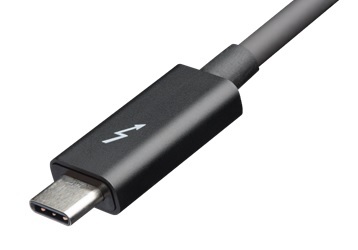
What Is Thunderbolt Technology and How Does It Work?
Thunderbolt technology is a high-speed hardware interface developed by Intel in collaboration with Apple, allowing for the connection of various peripherals such as monitors, external storage devices, and docking stations to computers and laptops. Initially released in 2011, Thunderbolt has evolved through several iterations, with the latest version offering speeds of up to 40 Gbps. This impressive data transfer rate enables users to handle high-resolution video and large files with ease, making Thunderbolt an ideal choice for creative professionals and power users who require rapid data access.
Thunderbolt works by combining data, video, and power over a single cable, utilizing the PCI Express (PCIe) and DisplayPort protocols. One of the distinguishing features of Thunderbolt is its daisy-chaining capability, which allows up to six devices to be connected in series using a single port on the host computer. Additionally, Thunderbolt incorporates the option for direct connectivity through USB-C, making it versatile and compatible with a wide range of devices. Overall, Thunderbolt technology enhances productivity and efficiency by simplifying connections while providing superior performance.
Counter-Strike is a popular first-person shooter game that has captivated gamers since its inception in the late 1990s. The game focuses on team-based gameplay, where players take on the roles of terrorists or counter-terrorists in various game modes. One interesting aspect of gaming is how to enhance your setup with quality peripherals; for example, check out the Top 10 macbook docks to improve your gaming experience on Mac. With its tactical gameplay and competitive nature, Counter-Strike continues to be a mainstay in the esports community.
The Evolution of Thunderbolt: A Look at Its Impact on Tech Devices
The Thunderbolt technology has undergone a remarkable evolution since its inception, fundamentally reshaping the way we connect and power our devices. Launched initially in 2011, Thunderbolt 1 offered data transfer speeds of 10 Gbps, and its adoption by manufacturers like Apple marked a significant shift in the landscape of connectivity. As technology progressed, Thunderbolt 2 and later Thunderbolt 3 introduced higher speeds of up to 40 Gbps, allowing for unprecedented data transfer capabilities and the ability to connect multiple devices through a single port. This evolution not only simplified connections but also paved the way for advancements in high-resolution displays and external GPUs, enhancing the overall user experience.
The most recent iteration, Thunderbolt 4, builds on this foundation by ensuring universal compatibility, security enhancements, and the support for daisy-chaining up to six devices. Its impact on tech devices is evident across various sectors, from creative professionals utilizing fast storage devices to gamers benefiting from improved graphics performance. As we look ahead, the impact of Thunderbolt technology continues to drive innovation in connectivity, bridging the gap between performance and versatility in an ever-evolving tech landscape.
Why You Should Consider Thunderbolt for Your Next Device: Advantages and Use Cases
Thunderbolt technology is revolutionizing the way we connect and transfer data between devices. With speeds reaching up to 40 Gbps, it offers a substantial performance boost compared to traditional USB connections. This lightning-fast data transfer capability is particularly advantageous for professionals in fields like video editing, 3D modeling, and software development, where large files must be moved quickly and efficiently. Additionally, Thunderbolt supports daisy chaining, allowing you to connect multiple devices—such as monitors, hard drives, and docking stations—through a single port, minimizing cable clutter and maximizing workspace efficiency.
Beyond speed and device connectivity, Thunderbolt also supports high-resolution displays, enabling stunning visual experiences for gaming and content creation. Whether you’re a digital artist looking for dual 4K setups or a gamer who wants to maximize your viewing experience, Thunderbolt provides the bandwidth necessary for immersive graphics without lag. Furthermore, many premium laptops and desktops now come equipped with Thunderbolt ports, making it a versatile choice for future-proofing your tech investment. In summary, considering Thunderbolt for your next device not only enhances performance but also expands your connectivity options and elevates your overall computing experience.